Familiar vulnerability can recruit story contributors
A free domestic-horror episode reached players and elicited personal submissions; reach and future commercial potential are different results.
Steam Discovery Research · 4 min narrative + evidence · Checked 2026-09-08
Released free · 2021-07-02 · Single-player · Mukul Negi, known as Rayll; solo creator in the October 2021 original interview. Inspect dated Steam evidence →
Can one recognizable everyday fear sustain a short episode and a continuing audience relationship?
Domestic routine establishes the stakes
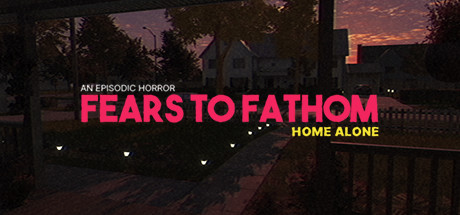
Home Alone is a free episode about a teenager left at home, using ordinary tasks, messages and a VHS presentation. The official premise makes the vulnerability understandable without elaborate lore. Our interpretation is that the location's familiarity supplies expectations the game can disturb, allowing a small environment to carry a specific emotional promise.
In Input's October 2021 interview, Rayll described unexpected interest in the first episode and soliciting personal stories through an address on the title screen. Fans gathered in Reddit and Discord communities. The resulting submissions are a useful participation signal: some players wanted to help shape future stories, not only consume the existing one.
Participation needs both boundaries and honest accounting
The interview reported substantial free downloads and a collection of submitted experiences. Neither establishes revenue from Home Alone. It also raised uncertainty about how literally submitted stories should be believed. For a new project, consent, sensitive details and fictionalization deserve an explicit process; audience enthusiasm is not permission to publish someone's experience unchanged.
Proposed experiment: build a closed laundromat where the player completes one late shift while text messages contradict visible events. Use three chores, two interruptions and one ending. Test whether players remember the ordinary routine well enough to notice the change. Only invite fictional premise suggestions after the episode works, and avoid collecting real trauma as free content.
Make the baseline situation familiar before breaking it.
Change the expression
A fictional late laundromat shift with contradictory messages.
Proposed mini-demo
Solo, ten working days: one shop, three chores, four texts, two disruptions and a twelve-minute ending.
Technical cuts
No voiced cast, open neighborhood, branching anthology, microphone mechanic or real personal-data collection.
Do not copy
Do not copy a submitted real incident, character identity, home layout or episode branding.
Proposed test
Six testers: four should identify the changed routine before the climax, and five should understand the ending without an explanation.
These prototype ideas and gates are our proposals, not the original games’ production plans or validated market benchmarks.
What can go wrong
Real-story sourcing creates consent and verification responsibilities.
Free download success does not establish willingness to pay.
A familiar location still needs careful pacing and sound.
References & how we used them
3 source references. “Used for” identifies where this page relies on each source; it does not mean the author endorses our interpretation. Historical access notes are not fresh verification.
Steam · Author not recorded · Publication date not recorded
Used for: Narrative context: Domestic routine establishes the stakes; Campaign event: 2021-07-02 — Steam free release; Evidence considered in our demand interpretation
Data-page label, not an article title.
Earlier case access record (2026-09-08): official-api-verified. Official store metadata, description and game modes read via https://store.steampowered.com/api/appdetails?appids=1671340&l=english. Store title and app identity matched.
Input / Inverse · Jack Needham · Published 2021-10-27
Used for: Narrative context: The audience offered more than downloads; Narrative context: Participation needs both boundaries and honest accounting; KPI: Free Steam downloads (July 2021 to 2021-10-27); KPI: Submitted personal stories (By 2021-10-27); Campaign event: July to October 2021 — In-game email invitation / Reddit / Discord communities; Campaign event: 2021-10-27 — Input developer interview; Evidence considered in our demand interpretation; Reported mechanism; causal explanation remains our inference
Evidence scope: Reporting on Fears to Fathom free downloads and community-submitted stories; free downloads are not paid sales.
Title and source access checked in this update. Public article text reviewed; linked paid datasets and external announcements not independently audited. Check date: 2026-09-08.
Earlier case access record (2026-09-08): full-public. Full original Input interview read on Inverse, published 2021-10-27. Free downloads and story submissions are separate metrics.
Steam · Author not recorded · Publication date not recorded
Used for: KPI: All-purchase-type Steam reviews (2026-09-08)
Data-page label, not an article title.
Earlier case access record (2026-09-08): public-api. Public Steam reviews JSON read using the exact language and purchase filters in this URL; no conversion to units.