Open-world survival craft. Borrow the promise. Constrain the world.
Eight core cases—not a market census. Full-game scope: very high. A constrained three-week slice: possible.
THE PLAYER PROMISE
A place to make yours. A reason to leave it.
Survival crafting has demonstrated substantial demand across the selected cases, including 2026 releases. This guide compares player promises, reported milestones and production tradeoffs. A small prototype can test one interaction; it does not establish the feasibility or commercial demand for a competitive open-world game.
01Leave a safe place to seek a needed resource.
02Gather under a legible constraint or threat.
03Return and turn resources into tools, shelter or automation.
04See the home or environment improve.
05Unlock a reason to venture farther.
DEMAND / SUPPLYStrong signals. Different denominators.
2025 releases; January 2026 analysis15 / 7220.83% historical cohort ratio
HTMAG reports 15 qualifying OWSC hits against an estimated 72 releases: 20.8% in the published table (15 / 72 = 20.83%).
The qualifying numerator is manually classified after article filters; the supply denominator is a Steam-tag approximation. This is not a representative startup success probability, a profitability rate, or evidence that a three-week project has a one-in-five chance.
2026 Q1 releases, sampled April 24 hitsGenre supply not published
HTMAG's embedded chart reports four OWSC games with at least 1,000 reviews, versus three in Q1 2025 and six in Q1 2024.
Genre supply is unavailable. Four rather than three qualifying games does not establish demand growth, lower competition or a higher hit rate. The young April snapshot is not comparable to September-observed June games.
June 2026 displayed release dates, observed September 2≥2 of 5 includedJune subset · 1 unresolved · not a rate
The site's bounded public-store subcohort contains five apps with OWSC among the returned tags: Solarpunk and Witchspire have confirmed 1,000-plus displayed-review minimums; Gombo and Skillwood are below that scored-review threshold; MAK: Survival has no numerical tooltip and is unresolved.
June only; anonymous US visibility; only up-to-seven returned tag IDs; overlapping classification; displayed release dates can include older Early Access games. Do not turn two of five into a full-Q2 40% success headline.
StarRupture's issuer reports 905,000 gross PC/Steam copies during H1 2026; Witchspire's issuer reports 100,000 Steam copies in its first week. These are distinct factory-survival and magical-survival promises.
Selected successes show demand exists, not the probability of reproducing it. Neither discloses a clean organic-attribution experiment.
Low release supply can reflect high production barriers.
Windrose's store describes three biomes, roughly 30 islands and more than 90 crafted points of interest in Early Access, with a stated 1.5–2.5-year route to full release. Witchspire expects at least a year in Early Access.
Our inference: a high observed genre ratio is not evidence of an easy gap. These are developer plans, not guarantees of delivery dates.
Small starting teams do not imply small finished games or free acquisition.
Planet Crafter began as a two-person project; the studio's current press kit describes seven people. Its founder's 2024 interview reports a €200,000 paid-streamer budget for the 1.0 push, alongside unpaid creator coverage and Steam featuring.
The campaign spend is not total development cost or total lifetime marketing spend. The interview does not isolate incremental sales caused by any one channel.
Five recognizable player promises
This place becomes ours
An empty platform becomes a recognizable home in one camera angle.
Raft · Solarpunk · ValheimTest: Can a viewer distinguish the starting and upgraded home without reading UI?
Our work changes the world
Dust becomes grass, power restores a dead machine, or a sterile room becomes habitable.
The Planet Crafter · SolarpunkTest: Does the change result from a player-built system rather than only a cinematic trigger?
One more supply run
A specific locked improvement makes the next destination desirable.
Abiotic Factor · Valheim · StarRuptureTest: After the first upgrade, does the player voluntarily plan the next trip?
The familiar loop has a new rule
Resources float past a raft, tools harvest by magic, or a catastrophe interrupts production.
Raft · Witchspire · StarRuptureTest: Can a new viewer explain the rule from a ten-second gameplay clip?
We made this story together
A rescue, building disagreement, failed expedition or shared return home.
Valheim · Windrose · Abiotic FactorTest: Does a real two-player session create a useful moment without a scripted actor?
These are editorial design patterns, not statistically proven gaps. OWSC is a useful player-promise family, not one rigid map format. Raft constrains movement around a mobile home; Abiotic Factor moves the loop into an interconnected facility. The comparisons below are design and market references, not claims that all belong to the same manually coded statistical category.
CASE EVIDENCEWhat to borrow—and what not to clone.
SteamDB reviews are its observed aggregate review counts, not the English-language score counts shown in the June search snapshot. CCU is simultaneous Steam activity, not units. Reported sales retain their original platform, gross/net and date scope. No sales-to-reviews conversion or causal organic attribution is made.
Preliminary gross units, not net after refunds. The issuer also reports a later 930,000 estimate; do not label that H1 sales. Company-wide revenue also includes Green Hell and is not StarRupture revenue.
Player promiseBuild a productive machine network, then make it survive a hostile world.
Marketing mechanism + feasible demo spin
What the source actually shows
The current Steam page demonstrates industrial progression and recurring cataclysms; it also offers a Satisfactory cross-game bundle.
Production-before/disaster-after is an easily readable trailer contrast with recognizable factory-game adjacency.
Spend: Undisclosed
PROPOSED THREE-WEEK SLICE · NOT MARKET-VALIDATED
Last Shift Before the Solar Flare
One exposed mining pad, three machines, two resources and one predictable incoming flare. Build a shield or choose which machine to sacrifice.
Technical cut: Use a fixed machine graph and scripted hazard pass. No giant conveyor simulation, terrain deformation or open-world streaming.
Recordable payoff: A nearly completed production line meets the flare; the player's last improvised shield either works or visibly fails.
Factory dependency graphs, pathing, combat, saving and persistent co-op multiply one another. The source game's existing audience and studio history are not part of a new team's starting position.
The publisher's release lists Steam, Epic Games Store and Stove; the million-copy statement does not break down stores. Do not report it as one million Steam sales.
Player promiseBuild a crew's home and ship, then sail toward dangerous treasure.
Marketing mechanism + feasible demo spin
What the source actually shows
The same publisher release reports more than 800,000 demo players, a demo peak above 22,000, and first place for wishlist additions during February 2026 Next Fest.
A substantial playable demo made the combined pirate fantasy testable before purchase.
Spend: Undisclosed
Publisher-reported festival outcomes are not an independently controlled attribution study or a forecast for a small demo.
PROPOSED THREE-WEEK SLICE · NOT MARKET-VALIDATED
Shipwreck Salvage Crew
A grounded ship, one beach and a short tide cycle. Salvage three hull parts and install one upgrade before the tide returns.
Technical cut: Keep the ship stationary during play; let the final repaired launch be a short in-engine ending. No boarding combat, free sailing or procedural archipelago.
Recordable payoff: An absurd improvised repair keeps the ship afloat—or the sea removes exactly the part players ignored.
The live game's Early Access page already promises roughly 30 islands, over 90 authored points of interest and several interacting progression systems. Shipping a single beach does not validate the cost of the broader pirate adventure.
No verified unit-sales disclosure included here. Do not convert reviews or CCU into paid copies.
Player promiseBuild a pleasant self-sufficient home and use an airship to reach the next island.
Marketing mechanism + feasible demo spin
What the source actually shows
The store uses community demo builds as examples and includes a prominent suitability warning: no story campaign, narrative quest progression, dedicated servers or deep combat.
Build showcases communicate the desired outcome; explicit exclusions help prevent a cozy sandbox from being sold as an action survival epic.
Spend: Undisclosed
PROPOSED THREE-WEEK SLICE · NOT MARKET-VALIDATED
Tiny Storm Station
One floating garden platform, solar panel, battery, pump and greenhouse. Redirect limited power through a brief storm to save an oversized vegetable.
Technical cut: Socket-based placement, one crop and a small deterministic power simulation. An unreachable second island can imply possibility, but the store must clearly describe the actual demo boundary.
Recordable payoff: A bare platform becomes a humming garden, then a silly giant crop pushes the roof off.
Cozy removes some combat burden, not construction, persistence, onboarding, exploration rewards or networking. A pleasant screenshot alone does not prove repeat play or purchase demand.
Issuer disclosure, not an owner-model estimate. The company describes several years of work and IPO-backed development; this is not evidence of a zero-budget microteam launch.
Player promiseConjure a home, move freely while building and replace mundane gathering with magical tools.
Marketing mechanism + feasible demo spin
What the source actually shows
An issuer release dated December 10, 2025 reported 100,000 Steam wishlists and highlighted its December 4 gameplay trailer. June's issuer disclosure reports the later sales milestone.
The magic is most marketable when it visibly changes a familiar verb, such as growing timber or sending pickaxes to gather.
Spend: No isolated campaign amount verified
Wishlists and sales are separate dated stocks; do not calculate a conversion rate from these two announcements.
PROPOSED THREE-WEEK SLICE · NOT MARKET-VALIDATED
Cottage on Probation
Restore one cursed cottage with three spells: grow wood, move a beam and animate one cleaning tool. Each shortcut produces a funny side effect.
Technical cut: One fixed plot and one familiar with a short state machine. No creature roster, breeding, RPG skill tree or general-purpose physics construction.
Recordable payoff: A helpful broom tidies the room by throwing the player's furniture out of the window.
Creature collection, progression, combat and construction create separate content demands. The developer expects at least one year in Early Access; preserve the magical-action hook without promising that breadth.
The transformation supplies a before/after image; substantive updates give players reasons to return.
Spend: €200,000 paid-streamer budget for 1.0; total spend unknown
PROPOSED THREE-WEEK SLICE · NOT MARKET-VALIDATED
Make This Crater Breathe
A single small crater with three resource patches, two machines and one visible transition from dust to moss to a tiny pond.
Technical cut: Use authored stage swaps, material blending and a controlled water-plane reveal, not general terrain deformation or ecological simulation. Start solo.
Recordable payoff: The same camera angle shows a dead crater becoming an unexpectedly lush miniature oasis.
A compelling transformation needs exploration, pacing and resource economics behind it. The two-person origin should not erase subsequent staffing, more than two years in Early Access, or paid marketing.
Do not replace this dated source with unsourced 1.5-million claims. Console subscription players and estimated console audience in the article are separate, not Steam sales.
Player promiseTurn mundane workplace objects into survival equipment and make increasingly strange supply runs with friends.
Marketing mechanism + feasible demo spin
What the source actually shows
Developer/publisher interview describes substantial chapter-like updates, localized Chinese assets and regional promotion, plus cross-game bundles. One bundle reportedly moved over 80,000 units with an additional 10% discount.
A chapter ending creates a clear next-update invitation; the workplace premise provides comic crafting props without requiring a joke in every line.
Spend: Undisclosed
Bundle units are not incremental sales proven by a control group. The article's crossplay/word-of-mouth explanation is participant interpretation, not isolated attribution.
PROPOSED THREE-WEEK SLICE · NOT MARKET-VALIDATED
Facilities Department: Still Open
One safe break room and three dangerous office rooms. Rewire a kettle and scavenged desk parts to keep the room powered through one containment failure.
Technical cut: Socket-built gadgets, one enemy, three room layouts and one ten-minute run. No giant persistent facility or dozens of crafting combinations.
Recordable payoff: A perfectly ordinary office appliance becomes an improbable rescue device during a panicked supply run.
The finished game's authored interconnected world, narrative discovery and broad crafting catalog are major costs. An office skin without useful systemic interactions will not reproduce its appeal.
No verified unit-sales disclosure included here. Do not convert reviews or CCU into paid copies.
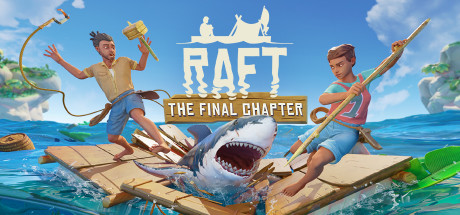
Player promiseTurn a fragile platform into a home while the sea keeps demanding decisions.
Marketing mechanism + feasible demo spin
What the source actually shows
An April 27, 2017 developer interview describes a freely accessible/pay-what-you-want student prototype, frequent community feedback and deliberate restrictions on exploration and resource access.
The hook and tiny raft made the core constraint understandable before a huge world existed. This is the most useful prototype-shape precedent in the set.
Spend: No marketing total disclosed; prototype development benefited from student loans
PROPOSED THREE-WEEK SLICE · NOT MARKET-VALIDATED
Rooftop Drift
A floating piece of suburban roof in a flood. Hook drifting furniture, choose whether to use it as shelter or a tool, and prepare for one wave.
Technical cut: Keep the platform near a fixed origin and move scenery/resources around it. Use snapping modules and one threat. A real networked moving rigid-body world is out of scope.
Recordable payoff: The player's proudly installed sofa becomes either a life-saving float or the first object washed away.
Raft's four-year Early Access history separates prototype clarity from finished-product depth. Its mature survival, navigation and authored destinations are not a three-week benchmark.
No verified unit-sales disclosure included here. Do not convert reviews or CCU into paid copies.
Player promiseOur modest camp becomes a defended home, then a launch point for the next dangerous journey.
Marketing mechanism + feasible demo spin
What the source actually shows
The Steam page presents a recognizable Viking fantasy, longhouse construction, boss-driven progression and player-hosted co-op; its current Early Access description lists seven completed biomes and hundreds of items.
Settlement transformations and expedition mishaps offer shareable material, but the public store page cannot establish which acquisition channels caused its sales.
Spend: Undisclosed in the sources used here
PROPOSED THREE-WEEK SLICE · NOT MARKET-VALIDATED
One Night at the Longhouse
One clearing, six snapping building pieces, a food preparation station and a single approaching threat. Make shelter decisions that visibly affect the night.
Technical cut: Avoid procedural biomes and simulated structural collapse. Use a small support graph and authored damage states; keep combat to one attack and one readable enemy behavior.
Recordable payoff: An overambitious extension either shelters the group or exposes a spectacularly obvious gap during the storm.
The February 2021 peak is historical, not 2026 demand. Valheim is an extreme winner whose progression depth, multiplayer persistence and years of content make it a poor effort or revenue baseline.
The June snapshot also includes these tagged games. They prevent a winner-only reading of the niche; they do not establish that either developer lost money.
A June app with OWSC among its returned tags did not automatically reach the review threshold. Forty reviews are not enough to infer net sales, profitability or categorical failure.
Cozy presentation plus an OWSC tag is not sufficient evidence of breakout demand. This is an observed lower-review comparator, not a verdict on the developer's goals or economics.
One authored location with three transformation states gives a single artist a tightly bounded visual target. Two machines can demonstrate the complete resource-to-world-change loop.
Hypothesis
A satisfying ecological transformation could make progression understandable without combat, dialogue or a large tech tree.
What is not proven
Before/after visuals establish clarity, not replayability or purchase intent. The specific crater setting is an untested concept.
Biggest delivery risk
If transformation is merely a timer, players may see a short animation rather than an engaging survival-crafting game. Require an interesting resource-allocation choice.
Three weeks: finish one honest loop.
Illustrative three-week prototype template, not a committed project schedule. Estimate implementation, art, testing and outreach separately for the people and systems actually available. Scope and staffing must be validated before committing to a deadline.
Deliverable: One honest 8–12-minute playable slice and a 30–45-second gameplay video. The player gathers, builds one meaningful upgrade, handles one threat, sees a changed home/world and reaches a clear ending.
WEEK 01
Choose one promise; greybox the full loop; define a five-resource/five-recipe ceiling; make the signature interaction functional by day three; test an unedited clip with target players before expanding content.
WEEK 02
Replace only the camera-critical assets; add sound and feedback; complete the threat and ending; test save/restart; run cold playtests. If co-op is essential, it must already work end-to-end with object ownership and reconnect behavior—otherwise commit to solo.
WEEK 03
Fix clarity and reliability; cut unused systems; capture real play; prepare the Steam page and press kit around demonstrated mechanics. Marketing work can proceed, but actual public release still depends on Steam onboarding, review and release timing.
Hard scope cuts
No procedural continent or infinite world.
No PvP, public dedicated servers or live-service promise.
No freeform vehicle construction or realistic buoyancy.
No tech tree larger than the slice can demonstrate.
No creature collection or enemy roster.
No trailer implying unimplemented biomes, combat or co-op.
Proposed validation gates
Understanding: show an unedited ten-second clip to ten target players; aim for at least seven to explain the action and goal. This is an internal decision rule, not a published industry benchmark.
Progression: observe whether cold testers choose the next improvement after the first payoff without coaching. Record behavior rather than asking only whether the game looks fun.
Distinctiveness: ask what this adds beyond its nearest reference. If most answers are only a different skin, replace the signature interaction before adding content.
Acquisition: keep social views, qualified Steam visits, wishlist changes and demo behavior separate. Public competitor data cannot replace the team's own attribution.
Scope: if the complete loop is not playable by the end of week one, remove a subsystem; do not expand the map.