Turn a management rule into a physical-looking action
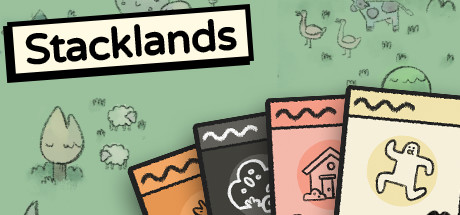
Placing one card on another becomes work, crafting or discovery. Familiar tabletop handling makes a management system readable; the evolving arrangement gives players an external picture of what their village is doing.
Steam Discovery Research · 3 min narrative + evidence · Checked 2026-09-08
Released · 2022-04-08 · Aran Koning with art by Lisa Mantel; part of the four-person Sokpop collective and its existing catalogue/subscriber model. Inspect dated Steam evidence →
Turn a management rule into a physical-looking action — what transfers to a small team?
The product and the audience
Placing one card on another becomes work, crafting or discovery. Familiar tabletop handling makes a management system readable; the evolving arrangement gives players an external picture of what their village is doing.
The interview documents a large existing Sokpop catalogue, Patreon subscribers, bundles and localization. China supplied the largest reported country share. These are distribution advantages surrounding the concept, not proof that card presentation alone drove purchases.
The reported bundle figure may overlap base-game copies and should never be added. The source does not disclose a complete acquisition budget or experiment that separates localization, recommendations and audience carryover.
Make combinations communicate verbs. A player should predict at least some outcomes from the cards' meaning, while discoveries create surprise. An opaque recipe list will not inherit the appeal of a tactile interface.
Developer-reported cumulative Stacklands sales. The separately mentioned 50,000 bundle purchases must not be added; inclusion or overlap is not resolved.
Placing one card on another becomes work, crafting or discovery. Familiar tabletop handling makes a management system readable; the evolving arrangement gives players an external picture of what their village is doing.
Demand trigger
The interview documents a large existing Sokpop catalogue, Patreon subscribers, bundles and localization. China supplied the largest reported country share. These are distribution advantages surrounding the concept, not proof that card presentation alone drove purchases.
Supply evidence
Selected comparator only. No supply denominator or unfilled-market claim is established by this story.
Opening to test
Build Night Market Ledger: stack stall, ingredient and worker cards to serve three orders. Days 1–4 implement stacking; 5–8 add twelve cards and six recipes; 9–11 add one scarcity event; 12–14 test a ten-minute market.
Still unproven
The reported bundle figure may overlap base-game copies and should never be added. The source does not disclose a complete acquisition budget or experiment that separates localization, recommendations and audience carryover.
The interview documents a large existing Sokpop catalogue, Patreon subscribers, bundles and localization. China supplied the largest reported country share. These are distribution advantages surrounding the concept, not proof that card presentation alone drove purchases.
Our explanation
Make combinations communicate verbs. A player should predict at least some outcomes from the cards' meaning, while discoveries create surprise. An opaque recipe list will not inherit the appeal of a tactile interface.
Other explanations
The reported bundle figure may overlap base-game copies and should never be added. The source does not disclose a complete acquisition budget or experiment that separates localization, recommendations and audience carryover.
Make combinations communicate verbs. A player should predict at least some outcomes from the cards' meaning, while discoveries create surprise. An opaque recipe list will not inherit the appeal of a tactile interface.
Change the expression
Use a new setting and decision structure, as proposed in the slice below.
Proposed mini-demo
Build Night Market Ledger: stack stall, ingredient and worker cards to serve three orders. Days 1–4 implement stacking; 5–8 add twelve cards and six recipes; 9–11 add one scarcity event; 12–14 test a ten-minute market.
Technical cuts
Content combinations expand faster than the card count suggests. Exclude combat, procedural worlds, technology trees and multiplayer; ship a visible recipe notebook and a fixed ending.
Do not copy
Do not copy assets, identity or the complete feature list. The original team and development time are not a two-week benchmark.
Proposed test
Ask six management players to predict three combinations before interacting. Then observe which discoveries prompt another attempt. Revise card meanings when confusion repeatedly occurs at the same combination.
These prototype ideas and gates are our proposals, not the original games’ production plans or validated market benchmarks.
What can go wrong
Content combinations expand faster than the card count suggests. Exclude combat, procedural worlds, technology trees and multiplayer; ship a visible recipe notebook and a fixed ending.
The reported bundle figure may overlap base-game copies and should never be added. The source does not disclose a complete acquisition budget or experiment that separates localization, recommendations and audience carryover.
References & how we used them
2 source references. “Used for” identifies where this page relies on each source; it does not mean the author endorses our interpretation. Historical access notes are not fresh verification.
GameDiscoverCo · Author not recorded · Publication date not recorded
Used for: Narrative context: Where the attention came from; Narrative context: What the story cannot establish; KPI: Steam copies sold (2022-07-11 report); Campaign event: 2022-07-11 — Documented product / campaign event; Evidence considered in our demand interpretation; Reported mechanism; causal explanation remains our inference
Article title, author and date not yet recorded; follow the exact URL.